

Door Hardware Maintenance Tips 2026: A Pro Guide
Updated: 4 days ago
Table of Contents
Why Door Hardware Maintenance Matters Now
Lubricating Moving Parts: Best Lubricants for Door Hinges and Locks
Choosing the Right Lubricant Type
Application Frequency and Technique
Cleaning Door Hardware Finishes Without Damage
Safe Cleaning Methods by Finish Type
Eco-Friendly Cleaning Agents That Work
Inspecting Hinges, Alignment, and Fasteners
Testing Locks, Latch Mechanisms, and Strike Plates
Signs of Failing Door Hardware to Watch For
Visual Wear Indicators
Functional Warning Signs
Commercial Door Lock Maintenance Schedule for 2026
Monthly Checks
Quarterly and Annual Tasks
Climate-Specific Maintenance
Maintaining Smart Locks and Modern Security Hardware
Frequently Asked Questions
Last Updated: August 31, 2026
Why Door Hardware Maintenance Matters Now
Neglected door hardware fails silently until it stops working entirely. A stuck lock, a hinge that won't hold the door straight, or a latch that doesn't catch properly are security vulnerabilities and operational liabilities. Consistent upkeep prevents 90% of hardware failures before they happen (the CDC).
In 2026, smart locks and modern security systems integrate with your broader access control infrastructure. A failing mechanical component doesn't just affect that one door; it can cascade through your entire security ecosystem. Whether you manage a residential complex, run a retail storefront, or oversee a medical facility, understanding how to maintain door hardware is foundational to operational continuity and security assurance.
This guide covers the practical steps that prevent hardware failure: lubrication techniques, safe cleaning methods, inspection protocols, and the specific warning signs that demand immediate attention.
Lubricating Moving Parts: Best Lubricants for Door Hinges and Locks
Door hinges and locks operate through constant friction. Proper lubrication reduces wear, extends component life, and prevents the squeaking, sticking, and binding that signals mechanical stress.
The wrong lubricant accelerates wear. Heavy oils attract dust and debris, creating a grinding paste inside lock cylinders. Spray lubricants evaporate quickly. Grease-based products gum up in cold weather.
Choosing the Right Lubricant Type
Silicone-based lubricants are the professional standard for door hardware. They provide long-lasting protection without attracting dirt or degrading seals. For hinges, apply light silicone spray to the pin and barrel where friction occurs. For locks, use dry silicone lubricant specifically formulated for lock cylinders to prevent debris accumulation inside the keyway.
PTFE-based lubricants (Teflon compounds) work well for sliding components like door closers and pivot points. Graphite powder is the traditional choice for lock cylinders when you want to avoid any liquid, it's dry, doesn't attract contaminants, and works reliably in extreme temperatures.
Avoid standard machine oil, WD-40, and general-purpose lubricants on door hardware.

Application Frequency and Technique
Lubricate hinges every 6 months for residential doors, every 3 months for commercial doors. Heavy-traffic areas may benefit from quarterly checks.
Apply lubricant to the hinge pin barrel where friction concentrates. A light spray is sufficient; excess lubricant attracts dust. Open and close the door several times to distribute the lubricant evenly.
For locks, apply lubricant to the keyway and latch bolt mechanism. Insert the key, work it in and out gently, then remove it. This distributes lubricant through internal pins and springs. Don't over-apply; a small amount is all that's needed.
Door closers require special attention at pivot points. Check the manufacturer's specifications for your specific closer model; some require annual lubrication, others are sealed and maintenance-free.
Cleaning Door Hardware Finishes Without Damage
Hardware finishes are protective layers that prevent corrosion. Aggressive cleaning damages these finishes, exposing bare metal to oxidation. The cleaning method depends entirely on the finish type.
Safe Cleaning Methods by Finish Type
Stainless steel finishes tolerate mild soap and water with a soft, non-abrasive cloth. For stubborn marks, a small amount of white vinegar works well. Avoid scouring pads and steel wool.
Brass and bronze finishes require gentler treatment. Use only soft cloth with mild soap and water. For tarnish removal, use a brass-specific cleaner on a small, inconspicuous area first. Never use vinegar on brass.
Chrome finishes are durable but can be damaged by harsh chemicals. Mild soap and water followed by immediate drying is safest. For water spots or light oxidation, use chrome-specific cleaner or rubbing alcohol on a soft cloth.
Painted or powder-coated finishes are the most fragile. Avoid any abrasive action or chemical cleaners. Warm soapy water and a soft cloth are your only safe options. Touch up chips or scratches with matching paint to prevent rust.
Anodized aluminum should be cleaned with mild soap and water only. The anodized layer is thin and easily compromised by abrasive methods.
Eco-Friendly Cleaning Agents That Work
Baking soda mixed with water creates a gentle paste that removes light oxidation and fingerprints without scratching. Castile soap (plant-based, mild) mixed with water is gentler than conventional dish soap and effective for regular cleaning.
For stubborn corrosion, a soft-bristled brush combined with mild soap and water provides gentle scrubbing without scratching.
Inspecting Hinges, Alignment, and Fasteners
A door that doesn't close smoothly, doesn't latch properly, or shows visible gaps indicates alignment or fastener problems. These issues worsen over time, eventually compromising security and function.
Hinge alignment directly affects door operation. When hinges shift even slightly, the door frame no longer aligns with the strike plate. The latch bolt misses the strike hole or hits at an angle, preventing the door from closing fully.
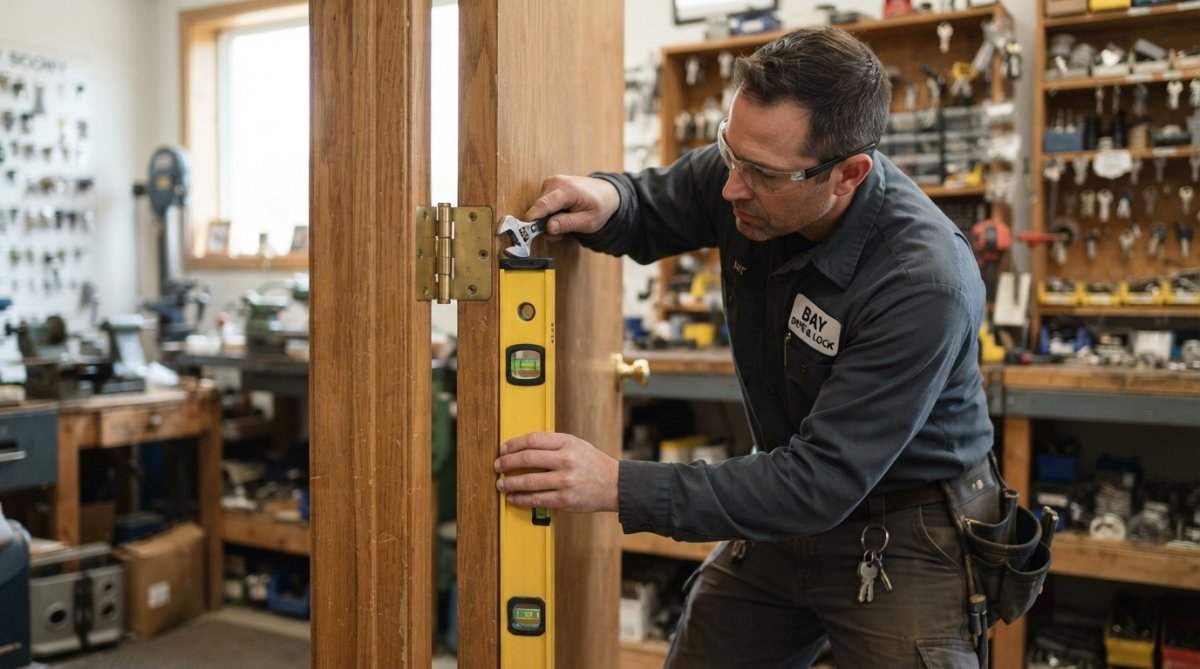
Start with visual inspection. Look for gaps between the door and frame at the top, bottom, and sides. A uniform gap of 1/8 inch is normal; larger or uneven gaps indicate alignment problems. Check that the door closes without binding or requiring force.
Inspect each hinge for visible damage or corrosion. Look for rust spots, pitting, or white oxidation. Check the hinge pin, it should be straight and move freely without resistance.
Examine all fasteners that secure hinges, strike plates, and door closers. Look for loose screws, stripped heads, or missing fasteners. Tighten any loose screws with the appropriate driver, but don't over-tighten, which strips the hole. If a screw won't tighten, use a slightly larger diameter screw or a threaded insert.
Check the strike plate alignment. The latch bolt should enter the strike hole smoothly without binding. If it doesn't, loosen the fasteners, adjust the plate slightly, and retighten. Test the latch action after each adjustment.
For commercial doors with door closers, check the pivot points and mounting brackets. These components bear the full weight of the door and see constant stress. Loose or corroded fasteners here create safety hazards.
Testing Locks, Latch Mechanisms, and Strike Plates
A lock that works most of the time is a lock about to fail. Regular testing catches problems before they become security issues or lockouts.
Test the latch bolt by pressing it with your finger, it should retract smoothly and spring back firmly. Any hesitation, grinding, or weak return indicates internal wear or debris.
The deadbolt should turn smoothly in both directions without catching or requiring excessive force.
With the door closed, try the handle or knob. The latch should engage fully without requiring force. If you need to lift the handle or push the door to make the latch catch, the strike plate is misaligned or the latch bolt is worn.
Test key operation by inserting it and turning through the full range of motion. Any resistance, grinding, or sticking suggests debris or internal wear. A key requiring excessive force or refusing to turn fully is a warning sign.
Check the strike plate for wear marks. The latch bolt should leave a clean impression in the strike hole. If the mark is off-center or the bolt is hitting the edge of the plate, adjustment is needed.
For smart locks, test both mechanical and electronic functions. The mechanical key override should work smoothly even if the electronic component is offline. Verify that the lock logs access events correctly.
Signs of Failing Door Hardware to Watch For
Hardware failure rarely happens without warning. The warning signs are there; most property managers simply don't know what to look for.
Visual Wear Indicators
Rust and corrosion are the most obvious indicators of hardware degradation. Surface rust (orange or reddish discoloration) is early-stage corrosion that can be cleaned and prevented. Deep pitting (small holes or craters in the metal) indicates advanced corrosion that compromises structural integrity. Pitted hardware should be replaced rather than repaired.
Tarnish on brass or bronze (dark or black discoloration) is primarily cosmetic but can accelerate if not cleaned regularly. White oxidation on aluminum indicates corrosion of the anodized layer and should be addressed promptly.
Visible gaps between the door and frame indicate misalignment. Gaps at the top or bottom suggest hinge problems; gaps on the sides suggest frame warping or strike plate misalignment.
Loose or missing fasteners are critical to address. A single loose screw can allow a hinge to shift, cascading into alignment problems. Missing fasteners should be replaced immediately with hardware-grade fasteners of the same size and material.
Bent or twisted hinges, strike plates, or door closers indicate impact damage or structural stress. These components should be replaced, not straightened.
Functional Warning Signs
A squeaking hinge is your hardware asking for lubrication. This is the easiest warning sign to address and should never be ignored.
A door that sticks or binds during opening and closing is misaligned or has internal mechanical wear. If lubrication doesn't resolve the issue, the hardware likely needs adjustment or replacement.
A latch that doesn't catch without force indicates strike plate misalignment or latch bolt wear. Test the latch in several positions to determine if the problem is consistent.
A key that's hard to turn, grinds when inserted, or occasionally gets stuck indicates internal debris or wear. This is a security risk.
A door closer that closes too slowly, too fast, or inconsistently indicates hydraulic fluid loss or internal spring failure. These components should be replaced.
A smart lock that fails to respond to the app, requires multiple unlock attempts, or shows inconsistent access logs indicates electronic or mechanical failure. Test the mechanical override immediately.
Commercial Door Lock Maintenance Schedule for 2026
Preventative maintenance schedules prevent emergency failures. Frequency depends on door usage, environmental conditions, and hardware type.
Monthly Checks
Visually inspect all doors for obvious problems: loose fasteners, visible corrosion, gaps between door and frame, or hardware that looks out of place. Test all locks by turning keys smoothly and verifying that latches engage without force. Listen for squeaking or grinding sounds when opening and closing doors. Check for signs of attempted tampering or forced entry.
Quarterly and Annual Tasks
Every three months, lubricate all hinges and locks. Every six months, tighten all fasteners using the appropriate driver with firm but not excessive pressure. Annually, perform a comprehensive inspection: check hinge alignment with a level, inspect all fasteners for corrosion, test strike plate alignment, and examine door closers for leaks or sluggish operation.
For commercial properties, schedule professional maintenance annually. A licensed locksmith can identify wear patterns and catch problems that visual inspection alone might miss.
Climate-Specific Maintenance
High-humidity environments accelerate corrosion. Monthly lubrication and quarterly fastener checks are minimum standards. Consider upgrading to stainless steel or marine-grade hardware if corrosion is persistent.
Cold climates require attention to door closers and locks. Cold temperatures thicken hydraulic fluid in closers and can make locks stiff. Monthly testing ensures reliable operation in extreme cold.
Dry climates create different challenges. Low humidity means less corrosion risk, but dust and sand can accumulate in lock cylinders and hinge mechanisms. Monthly cleaning and lubrication prevent debris buildup.
High-traffic areas need quarterly or monthly lubrication and fastener checks. Constant use accelerates wear, so more frequent maintenance prevents failures.
Maintaining Smart Locks and Modern Security Hardware
Smart locks add electronic and software layers to mechanical hardware. Maintenance is more complex but follows the same fundamental principles: keep moving parts lubricated, fasteners tight, and monitor for warning signs.
The mechanical components of a smart lock, hinges, latches, strike plates, require the same maintenance as traditional hardware. Lubricate the latch mechanism and any pivot points with silicone-based lubricant. Tighten fasteners that secure the lock body to the door. Check alignment and strike plate function regularly.
Keep the battery fresh by testing the lock monthly with the app or keypad. If the lock shows a low-battery warning, replace batteries immediately. A dead battery locks you out and disables the mechanical override if the electronic mechanism seizes.
Test the mechanical override (usually a physical key) monthly to ensure it works smoothly. This is your backup access method if the electronic component fails.
Monitor access logs through the smart lock's app or platform. Unexpected access attempts, failed authentication events, or gaps in logging indicate potential tampering or electronic malfunction. If you see suspicious activity, change your access codes and have the lock inspected professionally.
For integrated smart lock systems, verify that the lock communicates with your system regularly. Locks that drop offline or show inconsistent status are experiencing connectivity or hardware problems.
Apply software updates promptly. These updates often include security patches and firmware improvements. Check the manufacturer's app monthly for available updates.
Keep the lock body and surrounding door hardware clean. Wipe the lock body monthly with a soft, dry cloth.
Door hardware maintenance doesn't require specialized skills; it requires consistency. Monthly visual inspections, quarterly lubrication, and annual deep checks prevent 90% of hardware failures (osha.gov). When problems do occur, you'll catch them early enough to plan repairs rather than face emergency lockouts or security breaches. If you need professional inspection, lubrication, or repair services tailored to your property's specific hardware and environment, our licensed team can evaluate your doors and create a maintenance plan that fits your operation. Contact us for a consultation on how to protect your property's security infrastructure through proactive hardware care.
=== FAQ ANSWERS (audit these too, same rules) ===
[1] Q: How often should you lubricate commercial door locks? A: Commercial door locks typically need lubrication every 3 to 6 months, depending on usage frequency and environmental conditions (the American Dental Association). High-traffic areas may require quarterly maintenance. Use silicone-based lubricants or light machine oil, avoiding sticky products that attract dust. Test the lock's operation after lubrication to ensure smooth function. More frequent lubrication may be needed in humid or salty air environments where corrosion accelerates wear.
[2] Q: What are the signs that door hardware needs professional repair? A: Watch for grinding or squeaking sounds when operating locks, visible rust or pitting on metal surfaces, keys that stick or turn with excessive force, latches that don't catch fully, or hinges that sag causing misalignment. If doors won't close smoothly or locks engage inconsistently, professional inspection is warranted. Corrosion on strike plates or escutcheons, spring tension loss in closers, and security concerns warrant immediate expert attention to maintain structural integrity and security.
[3] Q: What tools are required for basic door hardware maintenance? A: Essential tools include a silicone-based lubricant, non-abrasive cloths for cleaning, a wrench or socket set for fasteners, a level for alignment checks, and a screwdriver set. For deeper maintenance, add a door closer adjustment tool, hex key set, and a flashlight for inspecting pivot points and keyways. Keep a small brush for removing debris from latch mechanisms. For commercial properties, consider a maintenance log to track tasks and identify patterns in hardware wear.
[4] Q: Can improper cleaning damage high-end door finishes? A: Yes, harsh abrasives, acidic cleaners, or steel wool can strip clear coat finishes and cause tarnish or pitting on premium hardware. Use pH-neutral, non-abrasive solutions and soft cloths instead. Avoid vinegar or lemon-based products on polished or brushed finishes. Test any new cleaner on an inconspicuous area first. Eco-friendly options like mild soap and water work well for most finishes. Regular gentle cleaning prevents buildup that might tempt you to use stronger chemicals, preserving finish integrity and hardware longevity.
Frequently Asked Questions
How often should you lubricate commercial door locks?
Commercial door locks typically need lubrication every 3 to 6 months, depending on usage frequency and environmental conditions. High-traffic areas may require quarterly maintenance. Use silicone-based lubricants or light machine oil, avoiding sticky products that attract dust. Test the lock's operation after lubrication to ensure smooth function. More frequent lubrication may be needed in humid or salty air environments where corrosion accelerates wear.
What are the signs that door hardware needs professional repair?
Watch for grinding or squeaking sounds when operating locks, visible rust or pitting on metal surfaces, keys that stick or turn with excessive force, latches that don't catch fully, or hinges that sag causing misalignment. If doors won't close smoothly or locks engage inconsistently, professional inspection is warranted. Corrosion on strike plates or escutcheons, spring tension loss in closers, and security concerns warrant immediate expert attention to maintain structural integrity and security.
What tools are required for basic door hardware maintenance?
Essential tools include a silicone-based lubricant, non-abrasive cloths for cleaning, a wrench or socket set for fasteners, a level for alignment checks, and a screwdriver set. For deeper maintenance, add a door closer adjustment tool, hex key set, and a flashlight for inspecting pivot points and keyways. Keep a small brush for removing debris from latch mechanisms. For commercial properties, consider a maintenance log to track tasks and identify patterns in hardware wear.
Can improper cleaning damage high-end door finishes?
Yes, harsh abrasives, acidic cleaners, or steel wool can strip clear coat finishes and cause tarnish or pitting on premium hardware. Use pH-neutral, non-abrasive solutions and soft cloths instead. Avoid vinegar or lemon-based products on polished or brushed finishes. Test any new cleaner on an inconspicuous area first. Eco-friendly options like mild soap and water work well for most finishes. Regular gentle cleaning prevents buildup that might tempt you to use stronger chemicals, preserving finish integrity and hardware longevity.
NEED AN ESTIMATE FOR YOUR PROJECT? CLICK HERE
This article was written using GrandRanker


Comments