

What Happens If Your Residential Lock Breaks
Table of Contents
Understanding Types of Residential Lock Failures
Identifying a Jammed Lock
Recognizing a Broken Key Inside the Cylinder
Detecting Internal Mechanical Failure
How to Fix a Jammed Door Lock: Immediate Steps
Tools You'll Need
Step-by-Step Troubleshooting
Removing a Broken Key from the Lock Cylinder
Security Risks When Your Lock Is Broken
Temporary Door Security Solutions
Residential Lock Replacement Cost and Options
Replacing Lock Components vs. Full Lockset
When to Call a Professional Locksmith
Legal Considerations for Gaining Entry
Frequently Asked Questions
Last Updated: September 30, 2026
Understanding Types of Residential Lock Failures
Residential lock breaks can happen in different ways. Each type requires a different solution. Understanding what went wrong is the first step to fixing it safely.
The most common failures fall into three categories: jammed locks, broken keys stuck inside, and internal mechanical damage. Knowing which one you're dealing with saves time and prevents you from making things worse.
Identifying a Jammed Lock
A jammed lock is stuck but still intact. The key won't turn smoothly, or it won't turn at all. You might feel resistance when you push the key in or try to rotate it.
Common causes include:
Dirt and debris buildup inside the cylinder
Rust from moisture exposure
Misaligned door frame putting pressure on the lock
Dried lubricant that's become sticky
The good news: a jammed lock can usually be fixed without professional help. The cylinder itself isn't damaged yet.
Recognizing a Broken Key Inside the Cylinder
A broken key leaves part of itself stuck in the lock. You'll see a piece of the key shaft protruding from the keyway, or the key may have snapped completely inside.
This creates an immediate problem: you can't insert another key until the broken piece is removed. Trying to force another key in will damage the cylinder further.
Detecting Internal Mechanical Failure
Internal failure means the lock's tumbler pins, springs, or cylinder are damaged. Signs include:
Key turns but the deadbolt doesn't move
Lock feels loose or wobbly inside the door
Bolt sticks or binds when you operate the handle
Key turns freely with no resistance (springs may be broken)
Internal damage usually requires full lock replacement. Repair isn't practical once the mechanism is compromised.
How to Fix a Jammed Door Lock: Immediate Steps
Most jammed locks respond to simple troubleshooting. You can try these methods before calling a professional locksmith.
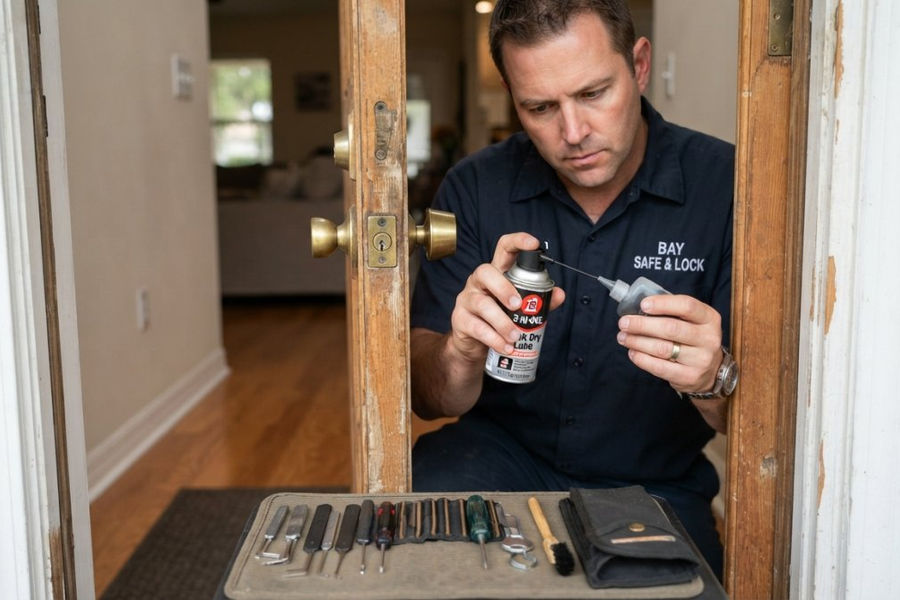
Tools You'll Need
You probably have most of these at home:
Graphite powder (pencil shavings work in a pinch)
Silicone-based lubricant spray
Small flashlight or headlamp
Paper towels or cloth
Toothpick or small wire (for cleaning out debris)
Avoid WD-40 or oil-based lubricants. They attract dirt and make the problem worse over time.
Step-by-Step Troubleshooting
Step 1: Clean the keyway (5 minutes)
Shine a light into the lock opening. Look for visible dirt, rust, or debris. Use a toothpick or small wire to gently remove loose material. Don't force anything.
Step 2: Apply graphite powder (3 minutes)
Step 3: Try the key again (1 minute)
Step 4: Use silicone lubricant spray (3 minutes)
Step 5: Wait and try again (varies)
Removing a Broken Key from the Lock Cylinder
A broken key stuck in the lock is frustrating, but removal is usually straightforward if you work carefully.
What NOT to do:
Don't drill the lock yourself unless you're comfortable with power tools
Don't hammer or apply heavy force
Don't try to push the broken piece deeper
How to extract it:
Use a key extractor tool (best option)
Insert the extractor into the keyway above the broken key piece
Gently hook the extractor under the key fragment
Slowly pull the extractor and key piece out together
Key extractors cost a few dollars and work reliably
Try tweezers or needle-nose pliers
If part of the key protrudes from the lock, grab it directly
Pull straight out with steady, even pressure
Don't twist or wiggle, which can break the fragment further
Use a thin saw blade or hacksaw blade
Insert the blade alongside the key piece
Gently work it under the fragment
Lift carefully to remove the piece
Security Risks When Your Lock Is Broken
A broken lock is a security breach. Your home's entry point is compromised until it's fixed.
Here's what's at risk:
Immediate dangers:
Anyone with basic tools can manipulate or force the lock open
The door frame may be vulnerable if the lock mechanism is damaged
You have no way to secure the door if the deadbolt won't engage
Longer-term concerns:
Burglars target homes with visible lock damage
Insurance may not cover theft if the lock was known to be broken
A jammed lock that finally gives way might leave the door unsecured
What to do right now:
Use a temporary security measure (see next section) until the lock is repaired
Don't advertise the problem to neighbors or on social media
If you're renting, notify your landlord immediately, they're responsible for providing secure locks
Temporary Door Security Solutions
While you arrange a permanent fix, you need to secure the door. These temporary measures aren't perfect, but they add a layer of protection.
Door wedge or stopper
A rubber or metal wedge under the door prevents it from opening
Works from the inside only
Inexpensive and effective for interior doors
Portable door lock or travel lock
Slide-bolt locks that don't require installation
Cost under $20 and work on most doors
Easy to remove when the permanent lock is fixed
Sliding chain or bar lock
Installs in minutes with self-adhesive strips
Allows the door to open slightly without full entry
Good for renters since it's removable
Bracing the door
Lean a sturdy chair or furniture against the door from inside
Not foolproof, but it slows down forced entry
Combine with other methods for better security
Security camera or alarm sign
A visible camera or alarm system deters casual intruders
Even a dummy camera can help
Pair with actual security measures for real protection
Motion-activated light
Exterior lighting makes the entry less attractive to burglars
Costs $20-40 to install
Improves visibility for you and neighbors
Residential Lock Replacement Cost and Options
When a residential lock breaks beyond repair, replacement is the next step. You have choices about what gets replaced and how much to spend.
Replacing Lock Components vs. Full Lockset
A lockset includes the exterior knob or lever, interior hardware, and the lock cylinder. You can replace just the cylinder or the entire lockset.
Replace the cylinder only
Cost is lower (varies by lock type and security level)
Takes 10-15 minutes if you're comfortable with basic tools
Best option if the door hardware is still good
Replace the full lockset
New exterior and interior handles plus lock mechanism
Costs more but gives you a complete upgrade
Better if the door hardware is old or damaged
Recommended when upgrading to a higher security level
Keyed vs. keyless entry
Traditional keyed locks are affordable and reliable
Keyless locks (code, biometric, smart) cost more but add convenience
Smart locks integrate with home security systems
When to Call a Professional Locksmith
Some situations require professional help. Knowing when to call saves money and prevents damage.
Call a locksmith if:
The broken key is stuck deep in the cylinder and you can't remove it
The lock mechanism is damaged and won't operate at all
You need a lock extracted from the door without damaging the frame
You want to rekey locks to match existing keys in your home
You need a master key system (common for property managers)
The door frame is damaged or misaligned
You need a high-security lock installed
Why professionals matter:
They have specialized tools to remove broken keys without damage
They can assess whether the cylinder or full lockset needs replacement
They install locks correctly to ensure proper function
Licensed locksmiths are bonded and insured (important for home security)
Legal Considerations for Gaining Entry
If you're locked out of your own home because the lock is broken, you have legal options for entry. Understanding them prevents legal problems.
Your rights as the homeowner:
You can hire a locksmith to open your own door
You can call a locksmith to remove a broken lock and install a new one
You can use reasonable force to enter your own home if there's an emergency (fire, medical crisis, etc.)
What you cannot do:
You cannot enter a rental property without the landlord's permission (even if you're locked out)
You cannot damage the door or frame beyond what's necessary for entry
You cannot trespass on a neighbor's property to access your home
If you're renting:
Contact your landlord immediately, they must provide access to your home
Document the broken lock with photos and written notice
The landlord is responsible for repairs and costs
Do not hire a locksmith without landlord approval unless it's a genuine emergency
If you're locked out and it's an emergency:
Call 911 if there's a fire, medical emergency, or safety threat
Police can assist with emergency entry in genuine situations
Document the emergency and your actions
Frequently Asked Questions
Can I fix a broken residential lock myself?
Minor issues like jammed locks may respond to lubrication or cleaning, but broken internal components, extracted keys, or damaged lock barrels typically require professional attention. Attempting extraction on a broken key risks pushing fragments deeper into the cylinder. If the lock is your primary entry point, professional repair ensures security and proper function. For non-critical locks, temporary measures work until replacement.
What should I do if my key breaks inside the lock?
Stop turning immediately to avoid pushing the fragment deeper. Do not attempt to extract it with pliers or tweezers, which can damage the lock barrel further. Apply graphite powder or lock lubricant around the keyway to reduce friction, then contact a professional locksmith. Key extraction requires specialized tools and expertise to preserve the lock mechanism.
How much does residential lock replacement cost?
Costs depend on lock type, brand, complexity, and whether you replace individual components or the entire lockset. Basic deadbolts cost less than high-security models. Professional installation fees vary by location and urgency. For an accurate estimate tailored to your specific lock and situation, contact a licensed locksmith for a quote.
How do I secure my home if the lock is broken?
Use temporary security solutions immediately: install a door wedge or stopper, add a portable door lock or chain, use a portable door brace, or place a security bar across the frame. These buy time until professional repair or replacement. For overnight security, consider staying elsewhere or having someone monitor the entry. Avoid advertising the broken lock on social media.
NEED AN ESTIMATE FOR YOUR PROJECT? CLICK HERE


Comments