

How Do You Safely Move a Heavy Antique Safe?
Last Updated: October 24, 2026
Quick Summary
To move heavy antique safe safely, assess its weight (most antique safes weigh 300-800 pounds), measure your route for obstacles, and decide whether to hire a professional or proceed with DIY using proper equipment. Safes over 500 pounds or those requiring stair navigation should be moved by professionals with specialty experience.
Most antique safes weigh 300-800 pounds; those over 800 pounds require professional movers.
Use an appliance dolly rated for 600 pounds minimum, ratchet straps rated for 1,000 pounds, and at least two to three able-bodied adults.
Any stairs, even two steps, increase risk exponentially and require a stair-climbing dolly or professional help.
Measure doorways, hallways, and turns; a 30-inch-wide safe needs at least 32 inches of clear opening plus 2 inches for padding.
Wrap the safe in moving blankets, secure with stretch wrap, and protect floors with runners or Masonite to prevent damage.
Table of Contents
Assess Your Safe and Plan the Route
DIY or Professional Help: Making the Right Choice
Essential Heavy Safe Moving Equipment
Preparing Your Safe and Home for the Move
How to Move a Heavy Safe: Step-by-Step Process
Moving a Safe Down Stairs: Specialized Techniques
Protecting Antique Furniture During a Move
Schedule Your Safe Moving Consultation
Frequently Asked Questions
Assess Your Safe and Plan the Route
To move heavy antique safe successfully requires planning before you touch it.
Next, map the route from the safe's current location to its destination.
Assess the safe's condition: loose hinges, damaged locks, rust spots. Interior drawers or shelves may shift in transit and cause internal damage.
Consider your home's structural integrity. Old hardwood floors can dent under concentrated weight, and stairs may not support a 600-pound load.
DIY or Professional Help: Making the Right Choice
Most antique safes fall into a gray zone where DIY is possible but risky.
Factor 1: Weight and load distribution
Under 300 pounds: DIY is realistic for two adults with an appliance dolly, provided the route is clear.
300-500 pounds: DIY is possible only if you have three or more people, a stair-rated dolly, and no stairs or tight turns.
500-800 pounds: Professional help is strongly recommended. Most antique safes in this range exceed the safe working load of consumer dollies and the lifting capacity of untrained teams.
Factor 2: Stairs and elevation changes
Any stairs, even two steps, increase risk exponentially. A 400-pound safe on stairs generates dynamic loads that can exceed 600 pounds on the leading edge.
If you must move down stairs, use a stair-climbing dolly or ramp system and have at least three people. If the stairwell has a turn or landing narrower than 36 inches, call a professional.
Elevators: Check the weight limit and door width. A 600-pound safe plus dolly and two people may exceed a residential elevator's capacity.
Factor 3: Access and route clearance
Measure every doorway, hallway, and turn. A 30-inch-wide safe needs at least 32 inches of clear opening, plus 2 inches for padding and dolly clearance.
Check for low ceilings, light fixtures, and door swing. Remove doors and trim if needed, but don't modify structural elements without professional advice.
If the route requires lifting over a threshold or navigating a tight L-shaped corner, the risk of pinching, tipping, or dropping rises sharply.
Factor 4: Equipment and team capability
DIY requires an appliance dolly rated for 600 pounds, ratchet straps rated for 1,000 pounds, moving blankets, floor protection, and at least two able-bodied adults, three for anything over 300 pounds.
If you lack any of these items, rent them or hire a mover. Renting a stair-climbing dolly from a local tool rental shop is often cheaper than repairing a damaged floor or safe.
Consider your team's physical condition. Back injuries, limited grip strength, or late-day fatigue are reasons to stop and call a professional.
When to stop and call a professional
The safe is bolted to the floor or built into a wall.
The safe weighs over 500 pounds and the route includes stairs or tight turns.
You cannot remove the contents and the safe is locked.
Professional movers bring air-ride suspension trucks, custom crating, and liability coverage that DIY moves lack. Before hiring, ask for a certificate of insurance and confirm antique safes are covered, not excluded.
Pro Tip Use the 500-pound rule as a quick screen: if the safe weighs more than 500 pounds, or if any stair is involved, get a professional quote before you buy or rent equipment. The quote often costs less than the equipment rental and the risk.
If you need to open the safe before moving to remove contents, Bay Safe and Lock offers expert safe opening services, and safe repair services if the move damages locks or hardware.
Use these weight thresholds and risk factors to decide whether to move your safe yourself or hire a professional.
Safe Weight | DIY Feasibility | Key Requirements |
Under 300 pounds | Realistic | Two adults, appliance dolly, clear route |
300-500 pounds | Possible | Three or more people, stair-rated dolly, no stairs |
500-800 pounds | Not recommended | Professional help strongly advised |
Over 800 pounds | Do not attempt | Hire specialty mover with safe experience |
Essential Heavy Safe Moving Equipment
Proper equipment protects both the safe and your home. Gather these before you start.
Load-bearing equipment:
Appliance dolly with a 600-pound capacity minimum
Forearm forklift for lifting and positioning
Furniture sliders or moving blankets to reduce friction
Protection materials:
Moving blankets or blanket pads for the safe
Floor runners or Masonite sheets to protect hardwood
Cardboard or plywood for corners and doorways
Tools and safety:
Pry bar or J-bar for use
Dolly ramps if you have stairs
Work gloves rated for heavy loads
Don't attempt this move with just a hand truck or basic furniture dolly. Heavy safes need appliance- or industrial-rated equipment; rent it from a local tool rental shop if you don't own it.
Preparing Your Safe and Home for the Move
Before moving day, prepare the safe and the spaces it will travel through.
Prepare the safe:
Remove all contents if possible to cut weight and prevent shifting inside.
If the safe is locked and you cannot open it, leave contents inside but secure loose shelves or drawers with padding.
Clean the exterior gently with a dry cloth. Avoid oil or wax products that make the surface slippery.
Prepare your home:
Clear the path of furniture, rugs, and obstacles. Remove light fixtures or doorway trim if the safe won't fit otherwise.
Lay floor protection along the entire route. Use floor runners, Masonite, or thick cardboard to prevent dents and scratches on hardwood.
Protect walls with cardboard or blanket pads at corners and tight spots where the safe might brush against them.
How to Move a Heavy Safe: Step-by-Step Process
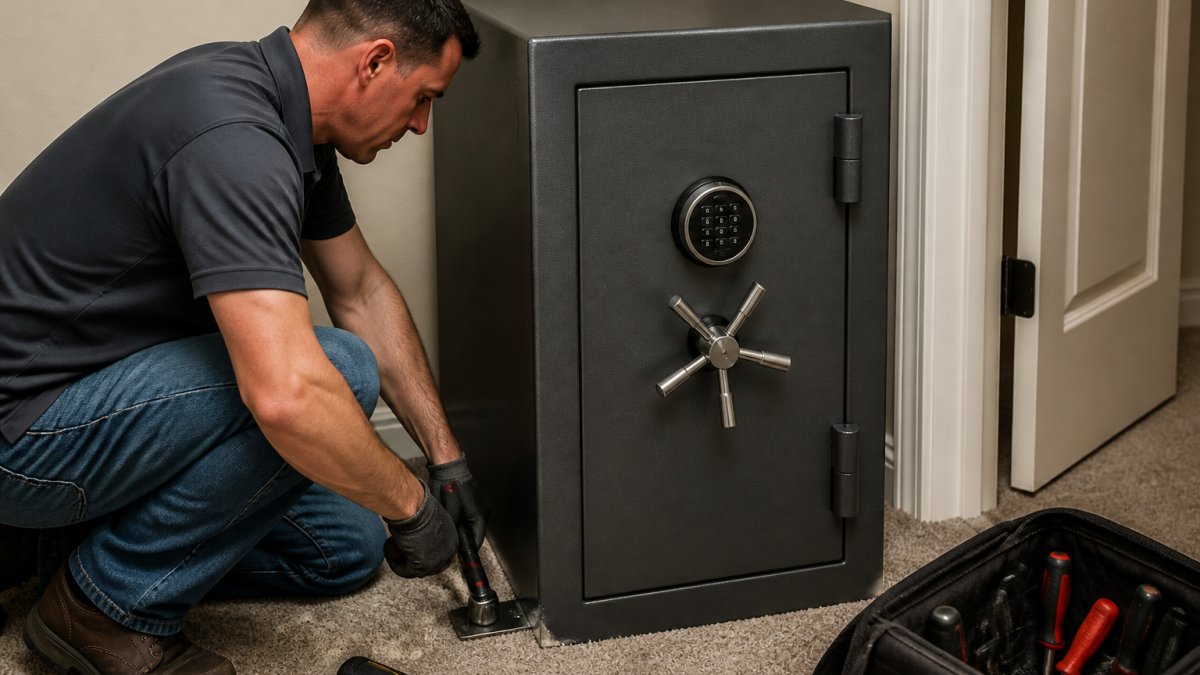
Follow this process to move heavy antique safe safely; the move typically takes two to four hours depending on distance and obstacles. Assign roles first: one leader who calls commands, one rear spotter, and one or two pushers. Only the leader gives directions; everyone else stops when the leader says stop.

Step 1: Position the dolly (10 minutes) Place the appliance dolly directly in front of the safe and test that its wheels lock securely before loading. Clear the immediate area of loose rugs, cords, and debris.
Step 2: Wrap the safe (15 minutes) Wrap the safe completely in moving blankets secured with stretch wrap to protect its finish and your walls.
Step 4: Secure with straps (10 minutes) Wrap ratchet straps around the safe and dolly and tighten firmly without over-tightening, which can damage the casing. The safe shouldn't shift at all when you push the dolly gently; if it does, re-tighten.
Step 5: Move through the route (30-60 minutes) Push the dolly slowly through the protected path at a walking pace, stopping frequently to check straps and stability.
Step 6: Position in the new location (20 minutes) Reverse the loading process: tilt the safe slightly with the pry bar, slide the dolly out, and lower the safe gently.
Step 7: Inspect and document (10 minutes) Examine the safe for new damage, photograph the final position, and check that locks and hardware still function. Document any damage immediately with photos and notes.
Injury prevention and emergency planning
Wear work gloves with grip, steel-toed boots, and knee braces if you are on the dolly side. Avoid loose clothing that can catch on the dolly or straps.
Keep hands and feet clear of pinch points: the gap between the safe and the dolly, the wheels, and door frames. A common pattern is crushed fingers when the safe shifts unexpectedly.
Set a lifting limit: no single person should attempt to lift more than 50 pounds of the safe's weight. Use the dolly for all vertical movement.
Watch Out Never move a heavy safe down stairs without a stair-climbing dolly or ramp system and at least three people. Carrying a safe by hand on stairs is the leading cause of serious moving injuries with heavy objects.
Key Takeaway The leader calls every move; the spotter watches the rear and the top; the pushers follow commands. If visibility or control is lost, stop and reset before continuing.
Moving a Safe Down Stairs: Specialized Techniques
Moving a safe down stairs is significantly more dangerous than horizontal movement. Professional movers use specialized equipment for this task.
If you must move the safe down stairs, use a dolly ramp system designed for heavy loads.
The ramp method:
Position ramps on the stairs to create a smooth path
Use a hand truck or appliance dolly to guide the safe down the ramps
Have one person controlling the dolly from above and one from below
Move slowly and stop frequently to check stability
If your stairwell is narrow or has turns, moving the safe down may be impossible without removing parts of the staircase. This is when professional help becomes essential.
Protecting Antique Furniture During a Move
Antique safes often have valuable finishes, ornamental hardware, and delicate mechanisms. Protect these details throughout the move.
Wrap the safe in moving blankets rather than plastic wrap. Plastic traps moisture and can damage vintage finishes.
Avoid placing other items on top of the safe. The weight can dent the casing or damage the internal locking mechanism.
If your antique safe has decorative feet, legs, or trim, protect these with extra padding.
For valuable antique safes, consider having a professional assess the move beforehand. Learn how to safely open and handle antique safes and understand how to prevent rust on vintage safes after the move is complete.
Schedule Your Safe Moving Consultation
Moving a heavy antique safe demands careful planning and the right equipment. If you're uncertain whether your safe can be moved safely, or if damage occurs during the move, Bay Safe and Lock can help.
Our team has over a decade of experience. If the move damages your safe's lock or hardware, we provide expert repair services to restore full functionality.
Frequently Asked Questions
What equipment do I need to move a heavy antique safe?
At minimum, you'll need an appliance dolly or forearm forklift rated for the safe's weight, moving blankets or blanket pads for protection, ratchet straps to secure the load, a pry bar or J-bar for leverage, and floor runners or Masonite to protect floors and stairs. Stretch wrap helps keep drawers and doors from shifting. A furniture dolly works for lighter safes, but heavy models (over 400 pounds) require industrial-grade equipment. Inspect all equipment before use to ensure it's rated for your safe's weight.
Should I hire professional movers to move an antique safe?
Professional movers are strongly recommended for safes over 600 pounds, models with sentimental or monetary value, moves involving stairs, or if your home has tight doorways or narrow hallways. Specialty movers carry insurance and have custom crating and air-ride suspension equipment that protects both the safe and your property.
How do I protect my floors and walls when moving a heavy safe?
Use floor runners or Masonite sheets to create a protective path from the safe's current location to the exit and truck. Lay blanket pads under the dolly to cushion movement and prevent scratches. Apply neoprene or foam padding to corner edges of doorways and stairwells where the safe might make contact. Secure padding with painter's tape so it doesn't slip. For stairs, position floor runners on each step and use ratchet straps to anchor the safe during descent. Remove protective coverings only after the safe is fully loaded and secured in the truck.
What's the safest way to move an antique safe down stairs?
Stairs require at least three people and specialized technique. Secure the safe to the dolly with ratchet straps in upright position. Use floor runners on each step and guide the dolly down slowly, with one person controlling descent from above and two spotting from below to prevent tipping. Never let the safe rest on its edge or tip backward. For safes over 600 pounds or valuable antiques, hire professional movers with stair-moving experience and insurance coverage to prevent injury and damage.
Don't risk damage to a valuable antique or injury to your team. Contact Bay Safe and Lock for a safe moving consultation and learn whether professional moving services are right for your situation.
NEED AN ESTIMATE FOR YOUR PROJECT? CLICK HERE
Add baisafe.biz as a preferred source on Google →

Comments